
Moisture Control Solutions for Vintage Cigar Boxes
- Understanding the problem: wood, paper and humidity interactions
- Why moisture matters for vintage cigar boxes
- Target humidity ranges — balancing wood stability and mold risk
- Common failure modes and early detection
- Practical moisture control methods for vintage cigar boxes
- Passive moisture control: desiccants and 2-way humidity packets
- Active humidification and dehumidification
- Monitoring: hygrometers, calibration and placement
- Choosing the right solution by box type and condition
- Restoration vs. preservation: different goals, different RH
- Recommendations by material
- Safe products and adhesives during repair
- Comparing moisture control options (practical guidance)
- How to set a protocol for a single box
- Brand note: packaging expertise that supports preservation
- Practical case examples and outcomes
- Case A: A cedar-lined humidor with label lift
- Case B: Decorative cardboard box in variable climate
- What I would avoid
- FAQ — Frequently Asked Questions
- 1. What RH is best for a vintage cigar box that still contains cigars?
- 2. Can I use silica gel to store my wooden cigar boxes long-term?
- 3. How often should I replace humidity packs or regenerate desiccants?
- 4. Is mold removable from vintage cigar boxes?
- 5. Should I put a hygrometer inside each vintage box?
- 6. Can I display vintage cigar boxes near windows or radiators?
- Final recommendations and how I can help
I have spent years advising collectors, restorers and packaging manufacturers on humidity control and preservation. Vintage cigar boxes—whether prized wooden humidors, decorative cedar boxes, or ornate cardboard collectors’ editions—require controlled moisture to preserve structure, finish, labels and any remaining contents. In this article I synthesize hygrometry fundamentals, proven desiccant and humidification strategies, monitoring best practices and restoration-safe techniques so you can make informed decisions to protect these items for decades.
Understanding the problem: wood, paper and humidity interactions
Why moisture matters for vintage cigar boxes
Vintage cigar boxes are typically made from tonewoods (Spanish cedar, mahogany) or heavy cardboard with printed labels and varnishes. Wood and paper are hygroscopic: they absorb and release water vapor according to ambient relative humidity (RH). Changes in moisture content cause dimensional change (swelling/shrinkage), promote mold growth above critical RH thresholds, and can delaminate inks and glue joints. The science of wood moisture content and its effects is well documented by the USDA Forest Products Laboratory and summary materials on wood hygroscopy (Wood moisture content - Wikipedia, USDA Forest Products Laboratory).
Target humidity ranges — balancing wood stability and mold risk
For cigar storage, humidors often target 65–72% RH to preserve tobacco; however, for vintage boxes that are valued as artifacts (not functioning humidors), a slightly lower RH is safer to reduce mold risk and slow adhesive breakdown. I generally recommend maintaining 45–60% RH for wooden and paper-based vintage cigar boxes. At RH below ~40% wood may dry excessively and crack; above ~65% you raise mold and active biodegradation risk. These thresholds are consistent with hygrometry guidance from metrology authorities (NIST - Humidity & Hygrometry).
Common failure modes and early detection
Typical signs of moisture-related damage include: warping or cupping of lids, softening or separation of glued joints, mold spots on interior linings or labels, silverfish or other pests attracted to damp cellulose, and fading/bleeding of printed artwork. Early detection relies on monitoring RH and inspecting seams and printed areas. I always recommend using a small digital hygrometer (calibrated) placed inside the box during assessment and storage.
Practical moisture control methods for vintage cigar boxes
Passive moisture control: desiccants and 2-way humidity packets
For collectors seeking low-maintenance solutions, passive products are ideal. Desiccants (silica gel, molecular sieves) reduce humidity, while 2-way humidity control packs (e.g., Boveda-style salt-saturated polymer packs) can either add or absorb moisture to maintain a set RH. Silica gel is well-characterized (Silica gel - Wikipedia) and effective at lower RH ranges; humidity packs are highly stable around their setpoint (common setpoints: 55%, 62%, 69%).
Active humidification and dehumidification
Active devices — small electronic humidifiers or dehumidifiers — are more suitable for climate-controlled display cabinets or storage rooms rather than individual boxes. For example, cabinet-sized Peltier dehumidifiers or ultrasonic micro-humidifiers controlled by an external hygrometer can maintain room RH precisely. For critical conservation work, maintaining the surrounding environment (storage room or display case) is safer than putting electronics inside an original vintage box.
Monitoring: hygrometers, calibration and placement
Accurate monitoring is essential. Use a calibrated digital hygrometer (±2% RH recommended) and verify calibration periodically with the salt-test method or comparison to a reference instrument. Place the sensor inside or immediately adjacent to the box for the first 72 hours to characterize microclimate. For long-term storage, log RH and temperature trends monthly. Reference: NIST humidity guidance (NIST).
Choosing the right solution by box type and condition
Restoration vs. preservation: different goals, different RH
If your goal is restoration (reconstituting adhesives, reshaping warped lids) temporary controlled humidification protocols may be used under a conservator’s oversight. These procedures can involve staged humidification (slowly raising RH to soften adhesives) followed by controlled drying. For preservation (display or long-term storage), avoid active rewetting; target stable RH in the 45–60% range to minimize movement and biological growth.
Recommendations by material
Spanish cedar and other humidified woods: maintain RH 50–60% to retain dimensional stability without promoting mold. Cardboard/labels with water-soluble inks: err drier — 45–55% to prevent ink bleed. Lacquered/varnished surfaces: avoid rapid RH swings which can craze finish; keep both RH and temperature stable. When in doubt, test a concealed area or consult a paper/wood conservator.
Safe products and adhesives during repair
Avoid water-based adhesives without proper environmental control—moisture can reactivate them later. Use conservation-grade PVA or wheat-starch paste per conservator recommendations. If adhesives must be softened, use controlled humidification chambers rather than direct wetting. For learning about safe conservation approaches, museum conservation literature is a reliable resource.
Comparing moisture control options (practical guidance)
Below is a quick comparison of common moisture control methods to help you choose by use-case (display, long-term storage, transport or active restoration):
| Method | Best for | Pros | Cons / Notes |
|---|---|---|---|
| 2-way humidity packs (e.g., 55%/62%) | Long-term, low-maintenance stabilization inside boxes | Simple, no calibration, predictable RH setpoint | Must choose correct setpoint; replace per manufacturer |
| Silica gel / desiccant packets | Protection during transport or short-term dryness | Effective at lowering RH; regenerable | Can over-dry wood; monitor RH; requires recharging |
| Small electronic humidifier / dehumidifier | Display cabinets or storage rooms | Precise control; programmable | Cost, maintenance, not suitable inside fragile antique box |
| Passive buffer materials (acid-free tissue, buffered board) | Extra protection for labels and interior surfaces | Adds barrier, evens microclimate, cheap | Not a substitute for RH control |
Sources: humidity principles (NIST), material hygroscopy literature (USDA Forest Products Laboratory), product performance summaries from manufacturers and conservation practice notes (Humidor - Wikipedia, Silica gel - Wikipedia, USDA FPL).
How to set a protocol for a single box
Here is a practical 6-step protocol I use with clients:
- Inspect the box for active mold or pest signs—wear gloves and a mask when handling suspected mold.
- Place a calibrated hygrometer inside; record RH and temperature for 48–72 hours to establish baseline.
- Decide target RH (45–60% typical). For display where visual humidity (cigar preservation) is not required, choose 50–55%.
- Use 2-way humidity packs if RH is outside the target by <±5% and you want low maintenance. Use silica gel only to reduce RH during transport.
- Monitor weekly for 1 month, then monthly. Replace packs or recharge silica gel per manufacturer guidance.
- If you observe persistent swings or active deterioration, consult a conservator before applying further moisture-related treatments.
Brand note: packaging expertise that supports preservation
Best Pack is a custom cannabis cigarette packaging company that provides one-stop services from design and printing to handicraft processing. We constantly insist on offering products of the best quality, excellent services and competitive prices to our customers. At the same time, the company persists in its team-working spirit and develops innovation continually to meet the chance and challenge brought by the Information Technology Age.
From cannabis protective packaging to cartridge box packaging, our real customer cases showcase our OEM/ODM capabilities, attention to detail, and commitment to quality. Our custom packaging not only enhances Best Pack image but also provides high-quality, tailor-made packaging solutions that elevate brand value, driving more purchasing decisions through promotions and customer feedback.
Our vision is to become the world's leading cannabis and cigarette packaging box manufacturer. Visit our website at https://www.gzbestpack.com/ or email Teresa@gzbestpack.com for inquiries. Best Pack specializes in Child Resistant Packaging Box, cannabis protective packaging, vape packaging, cigarette packaging box, custom vape cartridge boxes, cannabis packaging boxes, custom cannabis packaging, and custom cigarette packaging. We combine manufacturing expertise with design-driven, regulatory-aware practices to offer packaging that protects contents from moisture, contamination and tampering. If your vintage cigar box collection needs custom protective enclosures for display, transport or sale, our OEM/ODM services can create archival-quality solutions tailored to your needs.
Practical case examples and outcomes
Case A: A cedar-lined humidor with label lift
A client brought a 1930s cedar-lined box with label flaking and lid warp. Baseline RH measured 72% in a humid basement. I recommended relocating to stable indoor storage, placing 2-way 55% packs inside the box (one per small compartment), and a room dehumidifier. Over 6 weeks RH settled to 54% and label adhesion stabilized; a conservator re-adhered lifted areas using conservation-grade adhesive after the RH stabilized.
Case B: Decorative cardboard box in variable climate
A delicate printed cardboard box suffered surface frosting after repeated seasonal RH swings. The solution: acid-free interleaving tissue, silica gel packets in a sealed archival box for transport and storage, and relocation to interior closet away from exterior walls. After 3 months the surface remained stable with no mold recurrence.
What I would avoid
Do not attempt rapid re-humidification of a cracked or delaminating box—rapid moisture changes exacerbate damage. Avoid direct water, steam or household humidifiers placed inside the box. Electronic devices inside antique boxes may generate condensation on cold surfaces. Instead, control the environment around the object and use passive microclimate tools inside the box.
FAQ — Frequently Asked Questions
1. What RH is best for a vintage cigar box that still contains cigars?
If the box still contains tobacco and you intend to preserve the cigars, maintain RH around 65% (typical cigar humidor range). But for the box’s structural preservation you should balance cigar preservation with artifact care—consider transferring cigars to a modern humidor and storing the vintage box at 50–60% RH to protect paper and glue.
2. Can I use silica gel to store my wooden cigar boxes long-term?
Silica gel can lower RH and is useful for transport or when the environment is uncomfortably damp. For long-term storage it can over-dry wood if not monitored. I recommend 2-way humidity packs or buffering the storage environment for long-term preservation.
3. How often should I replace humidity packs or regenerate desiccants?
Replacement intervals vary: commercial 2-way packs often list 6–12 months depending on seal quality and box size. Silica gel should be recharged (dried) when indicator beads change color or when RH rises above your target. Monitor RH to determine replacement frequency.
4. Is mold removable from vintage cigar boxes?
Surface mold stains can sometimes be reduced, but not always fully removed without affecting finish or labels. Active mold growth requires immediate stabilization (lower RH) and specialist cleaning under conservation guidance. For safety, wear appropriate PPE when inspecting moldy items.
5. Should I put a hygrometer inside each vintage box?
For significant or high-value items, yes: a small digital hygrometer placed inside the box for an initial monitoring period (72 hours) will reveal the internal microclimate. For many collectors, spot-checking with sensor placement during seasonal changes is sufficient.
6. Can I display vintage cigar boxes near windows or radiators?
Avoid direct sunlight, windows and heat sources. Windows introduce temperature swings and light damage; radiators create thermal gradients and drying. Choose interior, stable-temperature display locations and use UV-filtering glazing when possible.
Final recommendations and how I can help
Protecting vintage cigar boxes is about managing a stable microclimate: monitor, choose the right passive or active control, and keep treatment conservative. If you need custom boxes or archival enclosures that both display and protect vintage items, Best Pack offers tailored packaging solutions and consultation for protective packaging design. Contact Best Pack via https://www.gzbestpack.com/ or email Teresa@gzbestpack.com to discuss archival inserts, custom-fit protective boxes, or OEM/ODM projects.
If you’d like personalized guidance, send photos and recent RH logs to Teresa@gzbestpack.com and I (or our packaging specialists) will advise a preservation plan including recommended humidity setpoints, product choices and any necessary conservation referrals.
Pre-Roll Packaging Box Sizes and Insert Options

Child-Resistant Features for Paperboard Cigarette Packaging
Where to Buy custom cigar box

Compliance Checklist for Disposable Paper Cigarette Packaging
About us
How much of your samples cost ?
1. If samples are without printing, we can make free samples as per your box size or structure;
2. If samples are silk printing, normally USD 25 per color,depending on your logo colors;
3. If samples are offset printing, need USD 180 as offset printing mold cost is high.
The process of your packaging box production?
1. Make knife mold as per box size and structure
2. order material as per mold
3. make printing on material if need to print
4. suppress and cut material
5. Makeboxes with glue edge in machine
6. Package boxes into cartons
How many kinds the printing process you have?
We can make Silk screen printing, offset printing, and also hot silver stamping
FAQs
Can you ship internationally?
Yes, we export worldwide and work with reliable logistics partners for timely delivery.
Do you support custom designs?
Yes, we provide custom packaging designs tailored to your brand and product needs.

Custom Printed Paperboard Cardboard Cigarette Box Packaging Case Disposable Paper Box for Cigarette Clamshell paper box

Custom Vape Packaging Box with CR Telescoping Design
The CR telescoping box is a sophisticated and secure packaging solution designed specifically for vape products. Featuring a telescoping (two-piece) structure, this box offers excellent protection and an elegant presentation, enhancing both the unboxing experience and brand appeal.
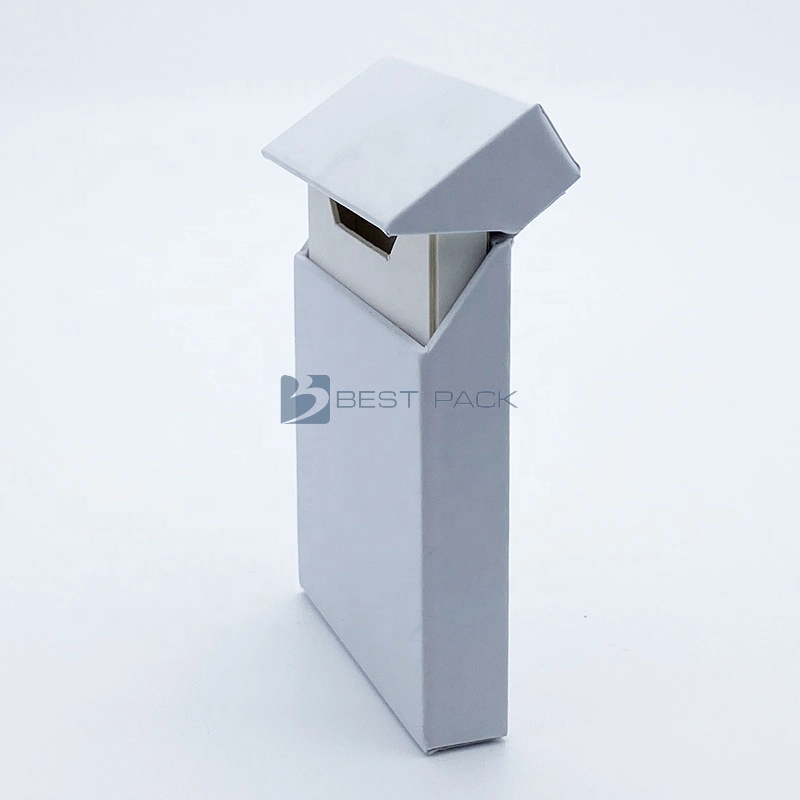
Custom Logo Child-Resistant Pre-Roll Box Packaging Biodegradable Handmade Luxury 5 Pack Embossing Childproof Pre Roll Package

Custom CR Vape Packaging Cardboard Boxes with Child-Resistant Design
CR custom vape packaging cardboard boxes are specially designed child-resistant packaging solutions crafted to ensure safety, protection, and premium presentation for vape products. Made from sturdy cardboard materials, these boxes balance regulatory compliance with brand aesthetics.
Creativity Meets Precision in Packaging.

Email: Teresa@gzbestpack.com
WhatsApp: +86 132 2665 7571
Best pack
Best pack
Best pack